
About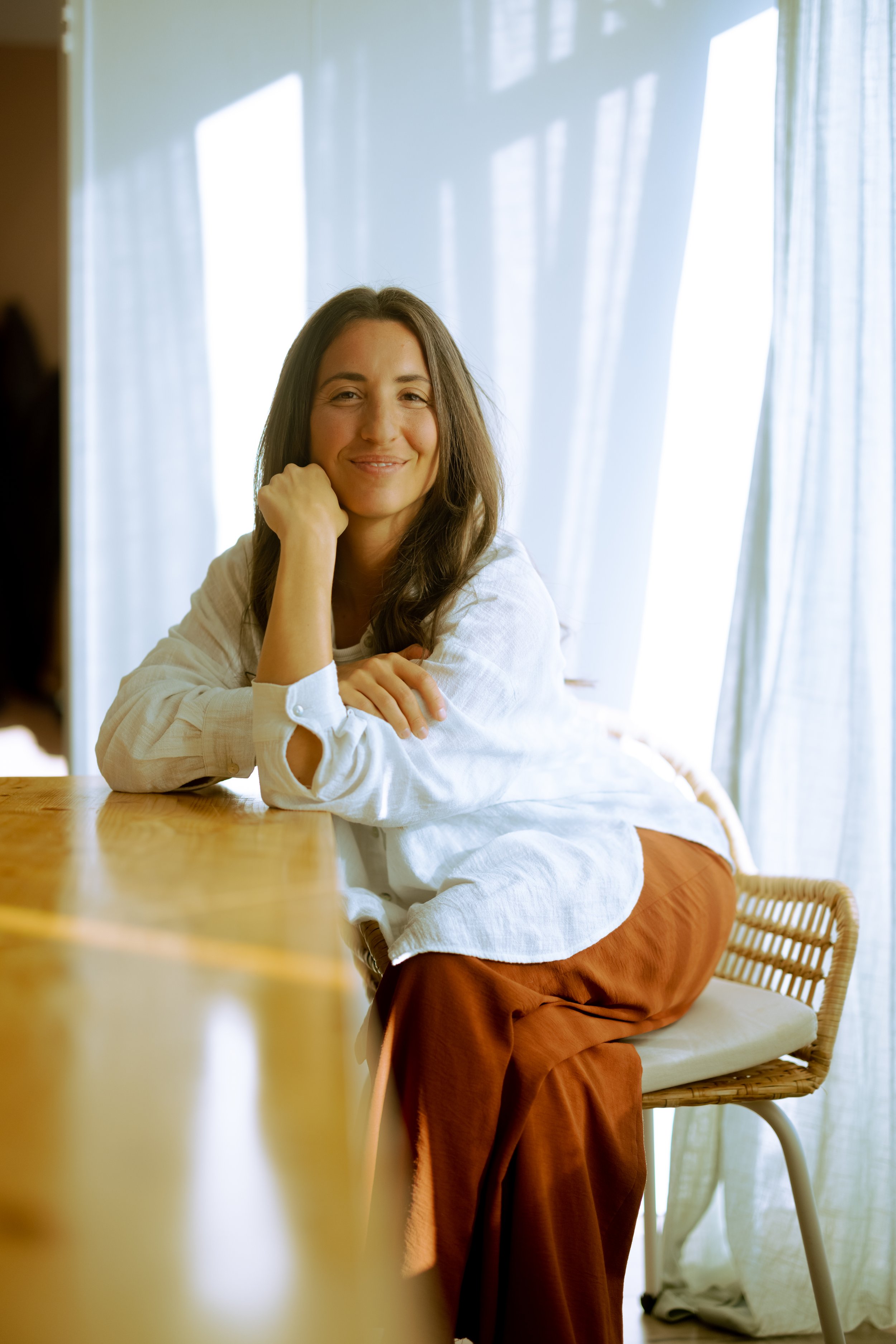
Hey, I’m Ambra
CAREER TRANSITION COACH
I help corporate women facing redundancy, restructuring, or a moment they know something has to change to figure out what they want next — and use this moment to finally build a path that feels right.
I built a successful corporate career, I was good at it.
I made smart choices — logical ones, the kind that promoted me year on year. What I didn't do, however, was stop and ask whether they were the right choices for me.
Twice , I tried to break free from this life that didn’t fit.
Each time, I brought the same fears with me and ended up back where I started. The problem wasn't the place or the job. I knew what I didn't want. I just didn't know what I did — and I had no tools to find out. So I kept going back to the familiar, even when it no longer fit.
Until 2022, when everything fell apart at once.
A breakup, my mother's cancer diagnosis, an exhaustion that scared me — I finally stopped pretending things were working.
This was my chance to find what I actually wanted.
I turned inward. I used journaling and meditation to understand myself. I started coaching and therapy to unravel the deeper patterns. I stopped running and started looking.
When my corporate role was made redundant in 2024, I had a choice: the safe option, or use the moment to start walking my own path. Life has given me a new chance, I didn’t want to waste it.
Now I guide other women through the same crossroads — not with theory, but with the understanding of someone who has been exactly where they are and came out the other side feeling more alive than I ever did.

Everything I offer comes from work I've practiced on myself first — lived experience supported by professional training.
One of my clearest memories was being in New Zealand, no plan, no certainty, terrified of the unknown. Lost, really. I knew what I didn't want. I just didn't know what came next. And yet I kept reaching for the familiar, the logical, the safe. I couldn't stand to be in the unknown long enough for my path to emerge.
These experiences — and the tools I learnt to move through them — shaped my Stop–Look–Go approach. Because when you get lost in the woods, the instinct is to keep moving. But the ones who find their way out are the ones who stop first, look once the fog clears, and only then choose their direction to move to.

THE APPROACH
What do you do when you get lost in the woods?
Stop
The most difficult thing, and yet the most necessary one. We can't find our own path when we never allow ourselves to be still. We start here: we pause the noise, the pressure, the automatic “doing” — and learn how to find what you already know.
Look
Like fog lifting in a forest, clarity emerges when we learn to listen. Together we use reflection practices, values work, and deep conversation to see clearly: how you got here, what you actually want, and which paths are calling you.
Go
Knowing without courage is just a nice feeling. In this final phase we build the tools to walk the path — transforming fear from obstacle to guide, and taking the first steps on a path that both feels right and pays the bills.
Ready to find your own path?
I'll walk with you.